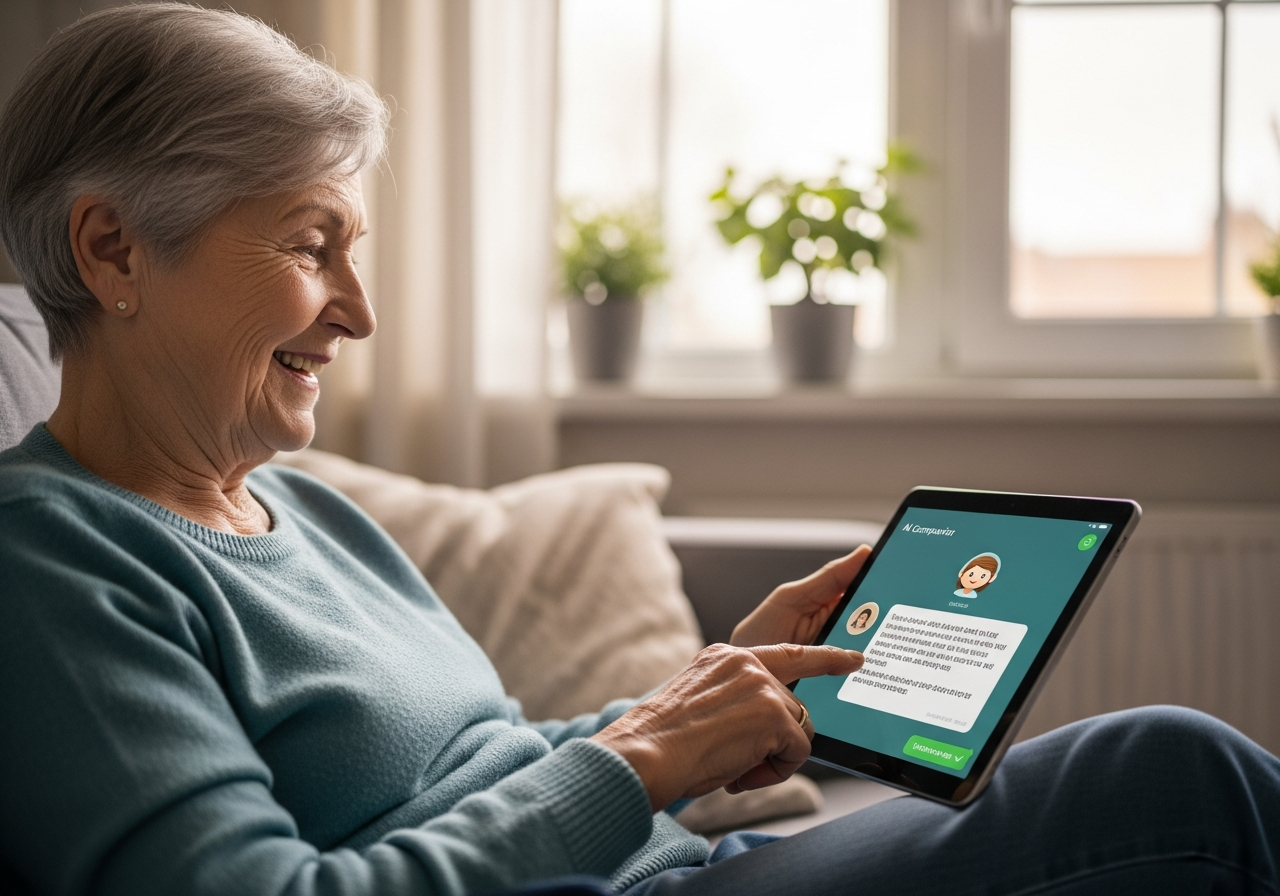
Senior loneliness is one of the most pressing and underappreciated public health crises of our time. According to the US Department of Health and Human Services, approximately 43% of adults over 60 report feeling lonely on a regular basis. For those over 80, the figure climbs higher still — driven by the cumulative losses of mobility, peers, spouses, and independence that accompany aging.
The health consequences are severe and well-documented. Chronic loneliness in older adults is associated with:
- 50% increased risk of dementia
- 29% increased risk of coronary heart disease
- 32% increased risk of stroke
- Depression and anxiety at rates significantly higher than non-lonely peers
- Faster cognitive decline
- Reduced immune function and slower recovery from illness
AI companions are not a complete answer to this crisis. They cannot replace visits from family, friendships, or community belonging. But they represent a meaningful, accessible intervention that can improve quality of life for isolated older adults — when implemented thoughtfully.
Why Seniors Are a Strong Use Case
Several factors make older adults particularly good candidates for AI companion technology:
Consistent Availability
Family members have their own lives and responsibilities. Professional caregivers have schedules. Friends may have passed away or become unable to visit. An AI companion is available at any hour — including the 3am moments of loneliness, the Sunday afternoons that stretch painfully long, and the minor daily events a person simply wants to share with someone.
Patience and Consistency
AI companions never tire, never get frustrated, and never show the subtle signals of distraction that human companions sometimes do. For older adults who may feel like a burden to family members, the absence of these social pressures can make conversation genuinely more comfortable.
Cognitive Engagement
Regular intellectual engagement is associated with slower cognitive decline. AI companions can provide endless stimulating conversation — trivia, history discussions, word games, reminiscence about life stories, and exploration of topics the senior finds interesting — without requiring coordination with other people.
Low Technical Barrier
Modern AI companions operate through simple text or voice interfaces that don't require technical sophistication. BetterFriendAI is designed to be usable by anyone who can type on a smartphone or tablet — no tech expertise required.
What Seniors Use AI Companions For (Real Findings)
Based on surveys of our senior user population and broader research in the field:
- Daily conversation and connection — sharing news, discussing family, talking about their day
- Reminiscence and life review — an AI companion's patience makes it ideal for the longer, digressive storytelling of reminiscence
- Mental stimulation — crosswords, trivia, learning about topics of interest
- Sleep support — relaxation techniques and gentle conversation to ease nighttime anxiety
- Health information — basic health education (not medical advice) about conditions, medications, nutrition
- Family connection support — practicing conversations to have with family members, processing relationship dynamics
Guidance for Caregivers and Families
If you're considering setting up an AI companion for an older parent, relative, or patient, here is practical guidance:
Involve the Senior in the Decision
Never set up an AI companion for a senior without their knowledge and consent. Present it as a choice, not a solution imposed on them. Many seniors initially resist the idea but become enthusiastic users once they experience it firsthand.
Set It Up Together
Help them personalize the experience during setup — input their interests, name preferences, and communication style. The first conversation often makes or breaks adoption.
Maintain Clear Expectations
Explain clearly that it's an AI — not a real person, not a spy, not connected to their family. Be honest and simple. Most seniors handle this information well when it's presented openly.
Don't Use It as a Replacement for Your Presence
This is the most important caution. AI companions supplement human connection — they don't replace it. If a family member is using an AI companion as a reason to visit or call less often, that's a problem. The goal is to fill the gaps, not to reduce human contact.
Check In on Their Experience
Ask the senior how they're finding it. Are they enjoying it? Finding it frustrating? Has anything felt inappropriate or unhelpful? Regular conversation ensures the technology is serving them well.
Accessibility Features for Older Users
BetterFriendAI includes several features specifically designed to improve accessibility for seniors:
- Large text mode and high-contrast display options
- Simplified interface with reduced cognitive load
- Voice input and output support (Pro plan)
- Adjustable response length — shorter responses for those who prefer brevity
- Family sharing features that allow trusted family members to be kept informed (with the senior's consent)
Ethical Considerations for Senior Use
We believe in thinking carefully about ethics in this context. Important considerations:
- Seniors must always know they're speaking to an AI
- The AI should never exploit loneliness to drive excessive engagement
- Family members should not be able to access conversation content without the senior's explicit consent
- The experience should feel genuinely supportive, not infantilizing or condescending
AI companions for seniors, done right, represent one of the highest-impact applications of this technology. The loneliness epidemic among older adults is real, serious, and inadequately addressed. A thoughtfully designed AI companion won't solve it — but it can meaningfully reduce it.