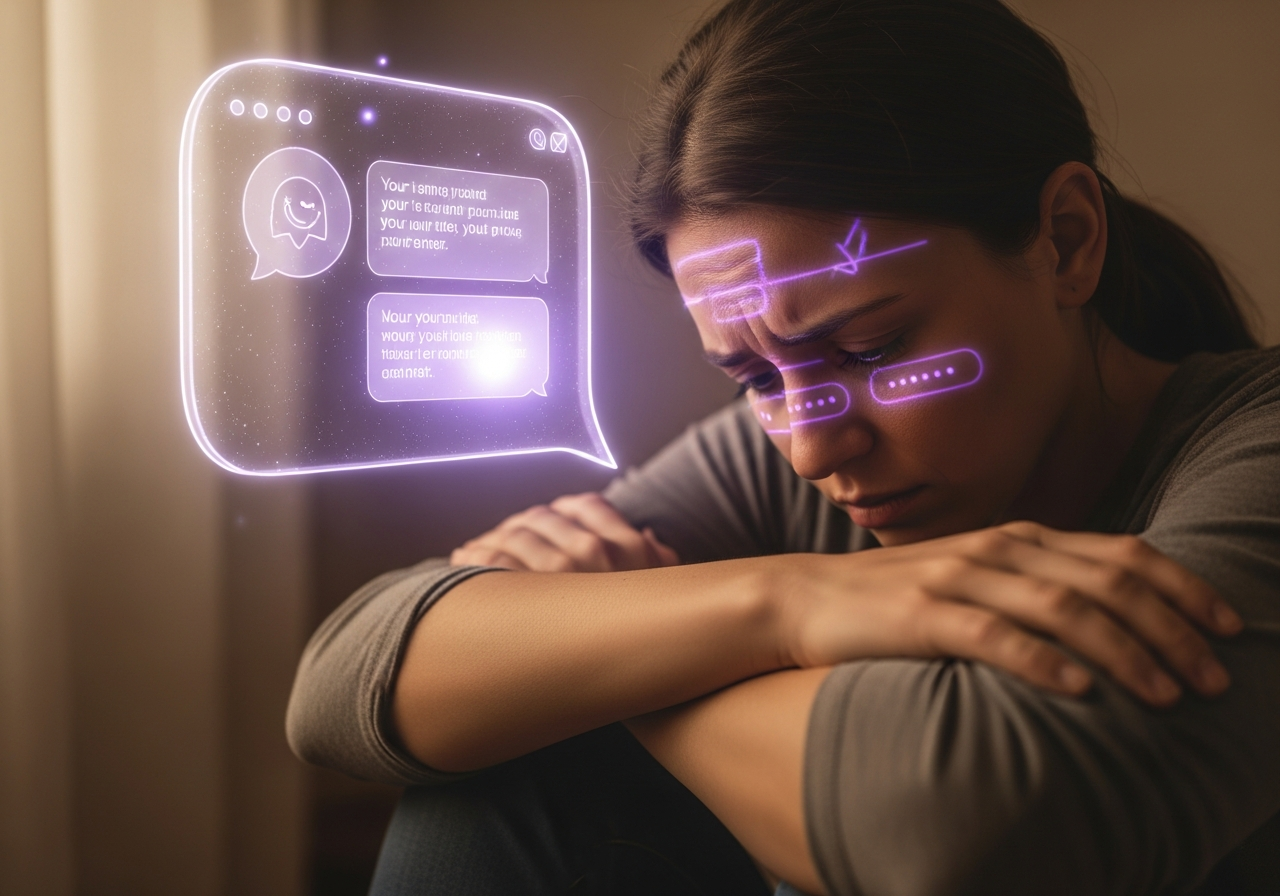
⚠️ Medical Disclaimer: This article is for informational purposes only and does not constitute medical advice. If you experience severe anxiety, panic disorder, or anxiety that significantly impairs your life, please consult a licensed mental health professional. For crisis situations, contact 988 (US) immediately.
Anxiety disorders are the most common mental health condition globally, affecting an estimated 284 million people. Yet access to evidence-based anxiety treatment remains limited — constrained by cost, availability of trained professionals, social stigma, and the simple fact that anxiety often strikes at inconvenient times when professional help is unavailable.
AI companions have emerged as one response to this gap. But do they actually help? This article reviews what the current research shows, explains the mechanisms behind any benefits, and outlines a clear-eyed picture of what these tools can and cannot do for anxiety.
Understanding Anxiety: A Brief Primer
Anxiety is the body's natural alarm system — a response to perceived threat that activates the sympathetic nervous system (the "fight or flight" response). In healthy amounts, anxiety is adaptive. When it becomes chronic, disproportionate, or interferes with daily functioning, it becomes a disorder.
Common anxiety presentations include generalized anxiety disorder (GAD), social anxiety disorder, panic disorder, specific phobias, and health anxiety. Each has somewhat different evidence-based treatments, though cognitive behavioral therapy (CBT) is the gold standard for most forms.
What Research Says About AI and Anxiety
The research base is still developing, but several findings are worth noting:
- A 2023 meta-analysis in JMIR Mental Health found that digital mental health interventions (including AI-assisted tools) showed moderate effectiveness for anxiety reduction compared to control conditions.
- Studies of conversational AI specifically (including chatbot-delivered CBT) have shown statistically significant reductions in anxiety scores on validated measures like the GAD-7.
- Users consistently report that 24/7 availability is a key benefit — anxiety doesn't respect business hours, and having immediate access to coping tools matters.
- Social anxiety users in particular report benefits from the low-pressure, judgment-free nature of AI interaction.
Specific Ways AI Companions Can Help with Anxiety
Breathing Exercises
Controlled breathing directly activates the parasympathetic nervous system, counteracting the physiological anxiety response. Techniques like box breathing (4 counts in, hold 4, out 4, hold 4), 4-7-8 breathing, and diaphragmatic breathing are evidence-based and can be guided by AI companions in real-time, on demand.
Grounding Techniques
Grounding exercises anchor you to the present moment, interrupting the rumination cycle central to anxiety. The 5-4-3-2-1 technique (name 5 things you see, 4 you can touch, etc.) is particularly effective for acute anxiety and can be facilitated interactively by an AI companion.
Cognitive Restructuring
A core CBT technique — identifying and challenging anxious thoughts ("what's the evidence for and against this belief?") — can be practiced conversationally with an AI companion. While not equivalent to clinical CBT delivered by a therapist, this practice reinforces skills that, ideally, are also being developed with a professional.
Worry Time Scheduling
This evidence-based technique designates a specific daily period for worry, helping contain anxious thoughts throughout the day. AI companions can facilitate this with structured prompts and gentle redirection outside designated worry periods.
Mood and Anxiety Tracking
Consistent tracking reveals patterns — what triggers anxiety, what time of day it peaks, what contextual factors correlate with episodes. This data is valuable both for personal insight and for sharing with a therapist if you're in professional care.
When AI Is NOT Enough for Anxiety
Please seek professional help if you experience:
- Panic attacks (sudden, intense episodes of physical symptoms like racing heart, difficulty breathing, dizziness)
- Anxiety that significantly impairs work, relationships, or daily activities
- Social anxiety so severe you avoid necessary situations
- Anxiety accompanied by depression, substance use, or other mental health conditions
- Health anxiety that leads to repeated medical visits or avoidance of medical care
- Anxiety related to trauma or PTSD
A Practical Anxiety Management Routine with AI
For people with mild-to-moderate anxiety who are not in crisis, here's a practical daily routine that incorporates AI companion support:
- Morning: Brief check-in to set the tone for the day; identify any anticipated stressors
- During anxious moments: Breathing exercises, grounding techniques, or thought challenging via AI
- Scheduled worry time: One focused period to process anxious thoughts with AI support
- Evening: Reflective journaling to identify patterns and decompress from the day
- Weekly: Review mood patterns and anxiety triggers from the week's data